
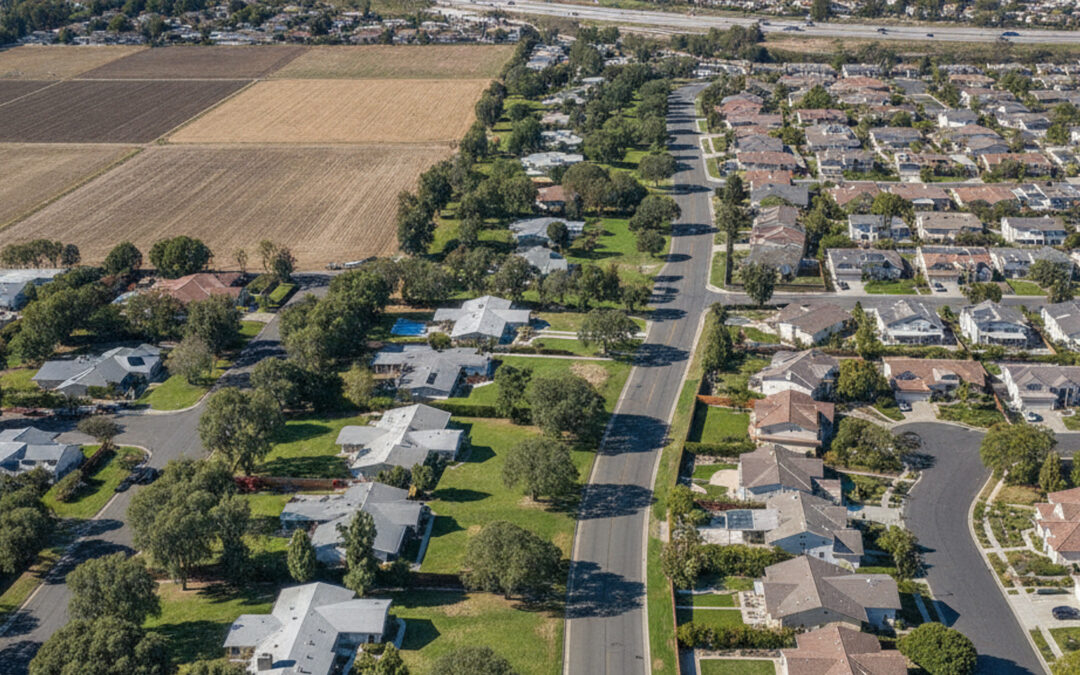
The median home price in Camarillo, CA sits around $885,000 today, reflecting decades of transition from a large agricultural hub to a popular residential community. Buyers often rely on the best real estate agent in Camarillo, CA to review properties across the distinct blend of mid-century tracts, newer developments, and preserved agricultural spaces.
Understanding the history of Camarillo, CA provides context for why the city is laid out the way it is and how property values have grown. Early Mexican land grants, the arrival of the railroad, and the eventual construction of the Ventura Freeway all left a physical mark on the local housing market. Many current neighborhoods sit on land that was once dedicated to lima bean fields and citrus orchards. Recognizing this history helps buyers understand the layout of local streets and the location of commercial centers.
Early Land Grants and the Founding of Camarillo
The area we now know as Camarillo was originally inhabited by the Chumash people, who established villages along the region’s creeks and valleys. Their presence predates the European settlement that eventually reshaped the landscape of Ventura County.
The structural foundation for modern property lines began in 1837 with the Mexican land grant system, specifically the creation of Rancho Calleguas. Decades later, Juan Camarillo purchased this massive tract of land, setting the stage for a town that would eventually bear his family name.
Adolfo Camarillo and the Rise of Local Agriculture
Juan’s son, Adolfo Camarillo, took over the ranch operations and transformed the local economy. He expanded the agricultural base by planting lima beans, walnuts, and citrus orchards, crops that dominated the local economy for decades.
In 1892, Adolfo built the Camarillo Ranch House, a massive Queen Anne style Victorian home that still stands today. This property is preserved by the Camarillo Ranch Foundation and serves as a physical reminder of the era. Adolfo also introduced the Camarillo White Horse breed, which remains a recognized symbol of the city’s heritage.
How Early Railroads and Highways Shaped the Town
The arrival of the Southern Pacific Railroad in 1898 changed the trajectory of the local economy. Trains allowed farmers to export lima beans and citrus at a much faster rate, bringing wealth into the region and encouraging early commercial development near the tracks.
Transportation shifted again in the 1950s with the completion of the Ventura Freeway, known today as U.S. Route 101. The freeway cut directly through the area by 1954, connecting the agricultural town to Los Angeles and Santa Barbara.
Today, those historic transportation corridors define daily commute patterns for local homeowners. Buyers often evaluate properties based on their proximity to Route 101 or the local Metrolink station, balancing access to larger job markets with the quieter pace of Ventura County. Commuters can reach Los Angeles in about an hour without traffic, and this average commute time makes the area a practical alternative for those who work in the city but prefer a quieter home base.
The Evolution of Local Real Estate and Housing
Following World War II, the demand for housing led to the subdivision of large farming ranchos into residential lots. Developers began building single-family homes to accommodate the growing population moving out of Los Angeles.
To manage this rapid growth and maintain local control over zoning, the city officially incorporated in 1964. Over the past 62 years, local planners have guided the transition from farm fields to master-planned communities like Mission Oaks.
The introduction of Leisure Village Camarillo in the 1970s marked another major shift in the local housing landscape. This large 55+ community demonstrated the city’s appeal to buyers seeking age-restricted neighborhoods with organized amenities and single-story floor plans.
Modern Neighborhoods and Current Property Values
Today, buyers can find a wide range of property types across the city. Historic preservation efforts keep the character of Old Town intact, while newer builds dominate the areas near the Conejo Grade.
The local real estate market moves at a steady pace, driven by limited inventory and strong buyer interest. As of mid-2026, the market reflects the following averages:
- Median Sale Price: Homes sell for roughly $885,000.
- Market Speed: Properties spend an average of 29 days on the market before going under contract.
- Available Inventory: There are currently about 192 homes for sale.
- Sale-to-List Ratio: Homes generally sell for about 100.3% of their asking price, meaning sellers often get full value or slightly above.
Community Growth and the Expansion of Public Spaces
As the population grew, the need for public infrastructure and educational facilities expanded. The Pleasant Valley School District, established in 1868, is the oldest existing school district in Ventura County and continues to serve local students.
City parks also evolved alongside the residential neighborhoods. Dizdar Park, originally a pioneer cemetery, underwent a major renovation and reopened in March 2026 as a modernized public space in the center of town.
On the outskirts of the city, Camarillo Grove Park offers hiking trails and outdoor recreation. This park sits on land originally donated by Adolfo Camarillo, linking modern outdoor amenities directly to the town’s founding family.
Historic Landmarks and Modern Local Amenities
The Pleasant Valley Historical Society and Museum maintains artifacts and documents from the city’s earliest days. Residents and visitors use the museum to understand the agricultural and structural changes the area has experienced over the past century. The museum grounds also feature a botanical garden highlighting native California plants and agricultural species that once fueled the local economy.
One of the largest institutional shifts happened in 2002 when the former Camarillo State Mental Hospital grounds were converted into California State University Channel Islands. The university brought new educational opportunities and employment to the region, further supporting local housing demand. The campus architecture preserves the Spanish Colonial Revival style of the original hospital buildings, blending historical aesthetics with modern educational facilities.
Frequently Asked Questions About Camarillo Real Estate and History
What is Camarillo, California famous for?
The city is famous for its agricultural roots, the historic Camarillo White Horses, and the popular Camarillo Premium Outlets. The 1892 Queen Anne Victorian ranch house built by Adolfo Camarillo also draws architecture enthusiasts from across the state.
Is Camarillo, CA an expensive or wealthy area to live in?
With a median home price around $885,000 in 2026, the city represents a premium market within Ventura County. While it costs more than some neighboring inland towns, buyers often find it offers better value compared to coastal cities like Santa Barbara.
What are the main attractions in Old Town Camarillo?
Old Town features independent boutiques, restaurants, and historical sites centered along Ventura Boulevard. The newly renovated Dizdar Park serves as a central gathering space for residents shopping and dining in the commercial district.
What famous people are associated with Camarillo, CA?
Adolfo Camarillo is the most prominent historical figure, responsible for the city’s early agricultural and economic development. In modern times, various athletes and entertainers have purchased homes in the area to enjoy the privacy and acreage available in Ventura County.
How do home prices in historic Old Town Camarillo compare to newer local developments?
Homes near Old Town often feature mid-century architecture and tend to be priced slightly lower than the newer, larger estates near the Conejo Grade. Buyers focused on walkability usually target the older districts, while those seeking modern master-planned amenities look to neighborhoods like Mission Oaks.
Are there special preservation rules or remodeling restrictions when buying a historic home in Camarillo, CA?
Properties designated as historical landmarks or located within specific heritage zones face restrictions on exterior modifications. Buyers should check with the city’s planning department before purchasing an older property if they intend to make extensive structural changes.