
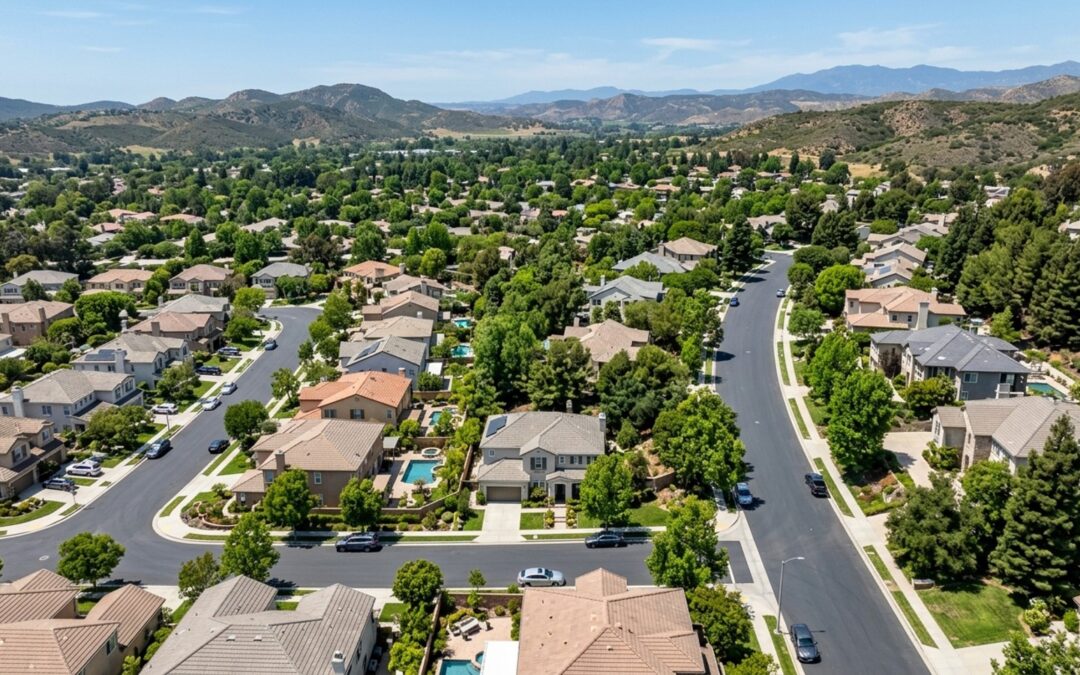
The median home price in Camarillo, CA right now is around $885,000. Homes are selling in roughly 29 days and often closing slightly above asking. That combination means you need your finances fully sorted before you make an offer – not after. If you need help with upfront costs, reviewing financial assistance and homebuyer programs in Camarillo, CA is a great first step.
Beyond your down payment, there’s a separate stack of fees required to fund the loan and transfer the property. Getting a handle on those numbers early is the difference between a smooth closing and a panicked wire transfer at the last minute.
Understanding Closing Costs in California
Closing costs are the collection of fees, taxes, and prepayments required to finalize a real estate transaction. They cover the administrative work of processing your mortgage, verifying the property’s legal status, and registering the new deed with Ventura County. Both parties pay a portion, but the charges are different for each side. As the buyer, you’re primarily on the hook for loan origination, appraisals, and future property taxes. The seller handles real estate commissions and county transfer taxes.
How they differ from your down payment
Your down payment goes directly toward equity in the home – it reduces the total amount you borrow. Closing costs are separate, out-of-pocket payments made to third parties for services rendered during escrow. Your lender needs proof of funds for both amounts before approving the loan. They’re not interchangeable, though some lenders will allow you to finance closing fees into the total loan amount if cash is tight.
Buyer expenses versus seller expenses
Sellers typically pay more total closing costs in California because they’re covering agent commissions. Strip those out and seller fees average around 2.73% of the sale price. Buyers carry a different set of expenses tied directly to their mortgage. If you’re paying cash, your settlement fees drop considerably because every lender-related charge disappears.
Average Buyer Closing Costs in Ventura County
California buyers typically pay between 2% and 5% of the purchase price in settlement fees, but the state average for buyers is around 2.1% – which is below the national average of 3.3%.
On a median-priced Camarillo home at $885,000, that 2.1% works out to roughly $18,585. Depending on your lender and how property taxes prorate on your specific closing date, your actual total could land anywhere from $17,700 to over $44,000.
Are closing costs really three percent?
Three percent is a reasonable working estimate – it gives you a comfortable buffer and won’t leave you short. California buyers often end up paying a bit less than that, but the final number depends on your loan size and when you close. Because property taxes and insurance are prepaid at settlement, closing right before a tax installment comes due will push that percentage higher.
Why costs vary by property
Every property brings its own variables. If the home is in a community with homeowners association dues, you’ll need larger upfront escrow reserves. Your loan type matters too – government-backed loans often carry upfront funding fees or mortgage insurance premiums that conventional loans don’t.
Estimated Buyer Closing Costs by Home Price
The simplest way to start your budget is to run the 2% to 5% range against your likely purchase price. That gives you a realistic window before you ever talk to a lender.
Higher-priced homes tend to land toward the lower end of that percentage range. Many lender and appraisal fees are flat rates, so they represent a smaller fraction of the total on an $800,000 house than on a $300,000 condo.
Here’s how the numbers shake out across common price points:
- $300,000: roughly $6,000 to $15,000
- $400,000: roughly $8,000 to $20,000
- $500,000: roughly $10,000 to $25,000
- $600,000: roughly $12,000 to $30,000, before any seller credits
Your Loan Estimate and Closing Disclosure
Your lender is required to provide an official Loan Estimate within three days of receiving your mortgage application. That document lays out every expected charge line by line – it’s the most accurate projection you’ll have of your cash needed to close. A few days before your settlement date, you’ll receive the finalized Closing Disclosure. That’s the final number. There should be no surprises when you sit down to sign.
The Fees Buyers Pay at Closing
A standard settlement statement has dozens of individual line items spread across various service providers. Most of them fall into three buckets: loan origination, third-party services, and prepaid property expenses. Knowing which category each fee falls into matters because some are fixed and some you can actually shop.
Loan and appraisal fees are the lender’s charges to process your mortgage – typically around 0.5% to 1% of your total loan amount. You’ll also pay for a professional appraisal, which the lender requires to confirm the home’s value supports the purchase price. Appraisal fees are generally flat rates paid early in escrow.
Title insurance and escrow fees follow local custom in Ventura County: the seller pays for the owner’s title insurance policy, and the buyer pays for the lender’s title insurance policy. That said, it’s a regional tradition, not a legal requirement – it’s negotiable in the purchase contract. Escrow fees, which cover the neutral third party managing the transaction funds and paperwork, are typically split evenly between buyer and seller in Southern California.
Transfer taxes and prepaids round out the statement. Ventura County charges a documentary transfer tax of $1.10 per $1,000 of the sale price. Sellers customarily pay this in Ventura County, but you should know it exists in case negotiations shift the burden. On top of that, your lender will collect several months of prepaid property taxes and homeowners insurance upfront to fund your escrow account and make sure your future bills are covered.
How to Lower Your Out-of-Pocket Expenses
You can’t negotiate your way out of an appraisal fee or a county tax – those are what they are. But there are legitimate ways to reduce the cash you need to bring to the table.
Asking for seller credits
A seller concession means the seller credits a portion of their proceeds toward your closing costs. It’s often structured in exchange for a slightly higher purchase price or to offset repair requests after inspection. In Camarillo’s current market – homes selling in about 29 days at an average of 100.3% of list price – sellers don’t have much reason to offer credits on fresh listings. Properties that have been sitting are a different conversation.
Lender credits and shopping around
Lender credits let you cover some upfront fees in exchange for a slightly higher interest rate over the life of the loan. It keeps your initial cash requirements down, which can make sense if you’re planning to refinance later. You can also shop around for third-party services like homeowners insurance and pest inspections. Comparing quotes from multiple providers won’t change the big-ticket items, but it can save you hundreds of dollars on your final statement.
Frequently Asked Questions
How much should I expect to pay in buyer closing costs for a typical home in Camarillo, CA?
For the median $885,000 home in Camarillo, plan on somewhere between $17,700 and $44,250. The California average for buyers runs around 2.1% of the purchase price, which puts a typical estimate near $18,585.
Are there any city-specific transfer taxes or local fees buyers must pay in Camarillo?
No. Camarillo doesn’t charge a city-specific transfer tax. The only transfer tax that applies is the standard Ventura County documentary transfer tax of $1.10 per $1,000 of the sale price, which the seller customarily pays.
Is it common to get the seller to cover buyer closing costs in the current Camarillo real estate market?
It depends on the property. With homes selling in about 29 days and averaging 100.3% of list price, sellers have strong leverage and generally aren’t offering closing credits on fresh listings. The calculus changes if a home has been sitting on the market.
How are Ventura County property taxes prorated and collected in my final buyer closing costs?
Your lender will collect a portion of your annual property taxes upfront to fund your escrow account. The exact amount depends on where your closing date falls within the Ventura County tax billing cycle.
At what point in the escrow process do I need to wire the funds for my closing costs?
You’ll wire your final funds to the escrow company a few days before your scheduled closing date. Once you receive and review your final Closing Disclosure from the lender, you’ll know the exact amount to send.
Are there any first-time homebuyer programs in Camarillo or Ventura County that help cover closing expenses?
Yes, assistance programs do exist, but eligibility comes down to income, household size, and the home’s purchase price. Check with local lenders to find out which state or county down-payment assistance programs are currently funded.