The official headcount for Camarillo, CA, gives you a sense of the city’s size, but it tells you very little about what it takes to buy a property here.
Key Takeaway
Camarillo has about 68,652 residents (Population estimate, July 1, 2025, V2025 vintage), and a voter-approved growth boundary keeps that number and the housing stock from changing much. Competition comes from how few homes trade, not from newcomers flooding the market. If you want room to negotiate, start with condos, where supply runs 6.3 months. If you need a detached house, expect a tighter market and price your offers close to asking.
Who This Guide Is For
You’re weighing a move to or purchase in Camarillo and want to know the city’s real size, whether it’s growing, and whether that makes buying a house or a condo harder.
What Is the Population of Camarillo, CA?
The head count matters less than how few homes change hands.
The latest U.S. Census Bureau QuickFacts estimate (July 1, 2025, V2025 vintage) puts the population of this Ventura County city at 68,652. The California Department of Finance’s newer preliminary estimate is 68,764 as of January 1, 2026. Estimates between census years are modeled, not counted, and the two sources can differ by hundreds of people. Cite the year and source with any figure you use.
Population Growth Since 2010
The city counted 65,201 residents in the 2010 Census and 70,741 in the 2020 Census. Since then, the population has dipped slightly. The 2026 Department of Finance estimate is 2.8% below that 2020 high.
Camarillo Population Density and Housing
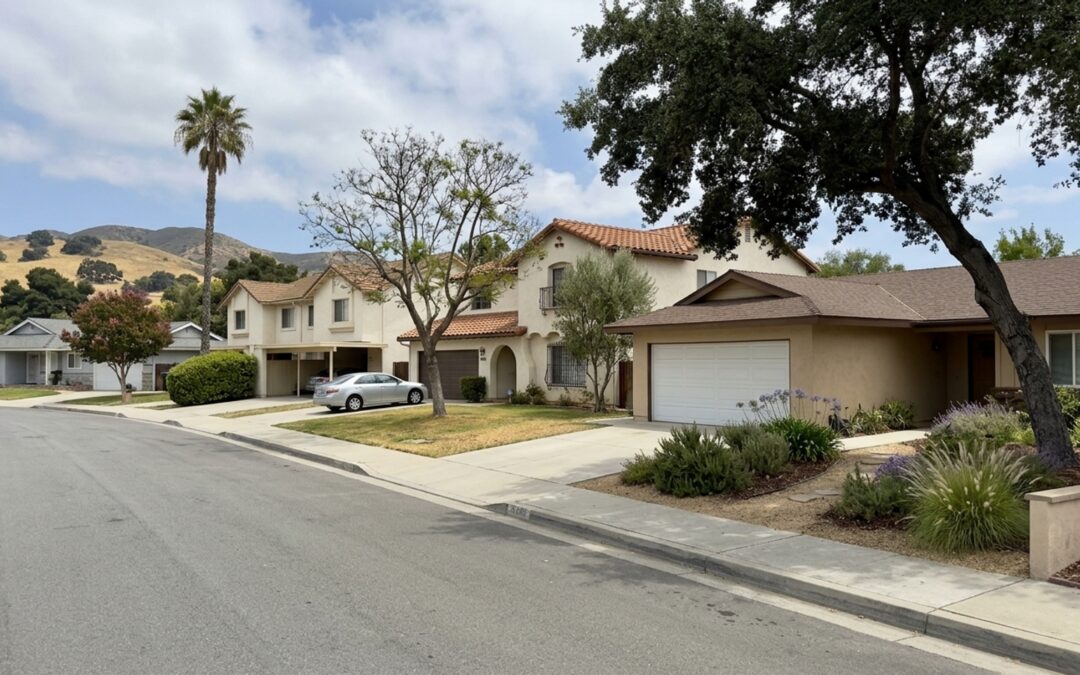
The official Census Bureau figure for population density is 3,593.5 people per square mile (2020). On the ground, that means a mostly low-rise, suburban layout of subdivisions, with denser condo and townhouse clusters, inside a boundary ringed by farmland and open space. Because the figure averages the whole city, including parks and farmland edges, a specific street can feel much more packed or more open.
The owner-occupied housing unit rate is 64.6% (2020-2024 5-year ACS). A high owner rate means fewer homes come up for sale each year, which keeps inventory tight.
How Much Can Camarillo Grow?
Camarillo voters adopted the City Urban Restraint Boundary (CURB) as part of the SOAR initiative in 1998. In 2016, they extended its development restrictions to December 31, 2050. Before that date, the boundary can be changed only by a vote of the people, apart from limited City Council exceptions under General Plan procedures.
On the state side, the City of Camarillo’s 6th cycle (2021-2029) Regional Housing Needs Allocation is 1,376 total housing units. That’s a planning target, not a promise of construction.
New homes arrive slowly and mostly as infill or higher-density projects inside the boundary, so don’t expect new home developments to ease prices. Pull the City of Camarillo planning-project list for any proposed developments near a home you’re considering, especially next to vacant parcels.
What the Population Limit Means for Home Prices
The all-homes median sale price rose 3.2% year over year to $833,103. That reflects which homes sold rather than broad appreciation, because both single-family and condo medians fell.
Single-family homes have 2.5 months of supply, and 26.1% sold above list. On desirable listings, plan for competition and write offers near or at asking.
Condo supply runs more than twice the single-family level. The condo median fell 9.2% year over year, but on only 21 condo sales, so treat that as a signal rather than a settled trend. You have more room to ask for price cuts or seller credits on these properties. Townhouses saw too few sales (10) to trend, but none sold above list.
Days on market barely differ by type, hovering around 50 to 53 days, so time on market is not where the split shows up. For any condo or townhouse, ask the HOA for:
- current monthly dues
- the latest reserve study
- any planned special assessments
- whether the complex is FHA-approved
How to Use These Numbers
If you only need the official head count for a form, report or comparison, take the figure, source and year from the first section and stop there. If you’re worried the city will feel noticeably more built-up in five to ten years, the sections on growth since 2010 and how much Camarillo can grow explain the boundary and the state housing target.
If you’re choosing between a detached house and a condo or townhouse, the home prices section shows where supply splits. Ask for comparable sales of the same property type in the same complex or subdivision, since the condo and townhouse figures rest on small samples. Meryll Russell at Search 805 Homes can pull current comparable sales for the property type you’re considering.
If you’re working out a monthly budget rather than a purchase, set average rent against a likely mortgage payment and check the city’s overall cost of living. If you’ll work outside the city, weigh commute times and the local job market alongside price.
At a Glance
- All homes: median sale price $833,103, up 3.2% year over year (191 sales, 90 days ending 2026-09-30)
- All homes: median 51 days on market, 99.1% sale-to-list, 23.9% sold above list, 3.1 months of supply, 191 homes in inventory (90 days ending 2026-09-30)
- Single-family: median sale price $867,654, down 1.4% year over year, median $507 per square foot (159 sales, 90 days ending 2026-09-30)
- Single-family: median 51 days on market, 99.1% sale-to-list, 26.1% sold above list, 2.5 months of supply (90 days ending 2026-09-30)
- Condo: median sale price $522,946, down 9.2% year over year, median $491 per square foot (based on 21 condo sales, 90 days ending 2026-09-30; small sample)
- Condo: median 50 days on market, 99.3% sale-to-list, 19% sold above list, 6.3 months of supply, 44 in inventory (based on 21 condo sales, 90 days ending 2026-09-30)
- Townhouse: median sale price $800,010, up 23.5% year over year, 0% sold above list, 4.5 months of supply, median 53 days on market (based on 10 townhouse sales, 90 days ending 2026-09-30; too few to treat as a trend)
Camarillo Population FAQs
What Are the Zip Codes for Camarillo, CA?
Camarillo is served by three ZIP Codes: 93010 (Standard), 93011 (PO Box), and 93012 (Standard, covering the Santa Rosa Valley area). Confirm an exact address with the USPS ZIP Code lookup.
Is Camarillo, California, a Wealthy Area?
The single-family median sale price was $867,654, down 1.4% year over year (159 sales, 90 days ending 2026-09-30). That puts typical house prices well above many U.S. markets.
What Is Camarillo, CA, Known For?
The city is home to California State University Channel Islands, which opened in 2002, as well as the Camarillo Premium Outlets and the Camarillo Airport. Its agricultural history reflects its beginnings as Rancho Calleguas, a 10,000-acre land grant obtained by the Camarillo family in 1875.
Is It Expensive to Live in Camarillo, CA?
Yes. Housing is the largest cost driver, and even the condo median sale price is above half a million dollars.
Is Camarillo in Los Angeles County?
No. Camarillo is in Ventura County, where it incorporated in 1964.
How Did Camarillo Get Its Name?
The city is named for brothers Juan Camarillo Jr. and Adolfo Camarillo, who owned the roughly 10,000-acre Rancho Calleguas and founded the city. Postal officials rejected the original rancho name of “Calleguas” as too hard to pronounce, so the community adopted the family’s name instead.
Does Camarillo Have Public Transportation?
Yes. Residents have a Fixed Route bus, a Trolley Route and a Dial-A-Ride service, along with countywide VCTC Intercity buses. The Camarillo Metrolink Station provides Ventura County Line and limited Amtrak Pacific Surfliner service.
Does Camarillo Have a Beach?
No, Camarillo is inland. The nearest coastal point is Point Mugu State Park Beach, about 10 driving miles away, or roughly 16 minutes by car.
Sources
-
- California Department of Finance: E-1 Population Estimates
- Census Bureau: QuickFacts 2010 and 2020
- City of Camarillo: CURB/SOAR Ordinance
- City of Camarillo: 6th Cycle Housing Element
- Redfin: Data Center
- Wikipedia: Camarillo, California
- LinkedIn: City of Camarillo Government
- City of Camarillo: Public Transportation