
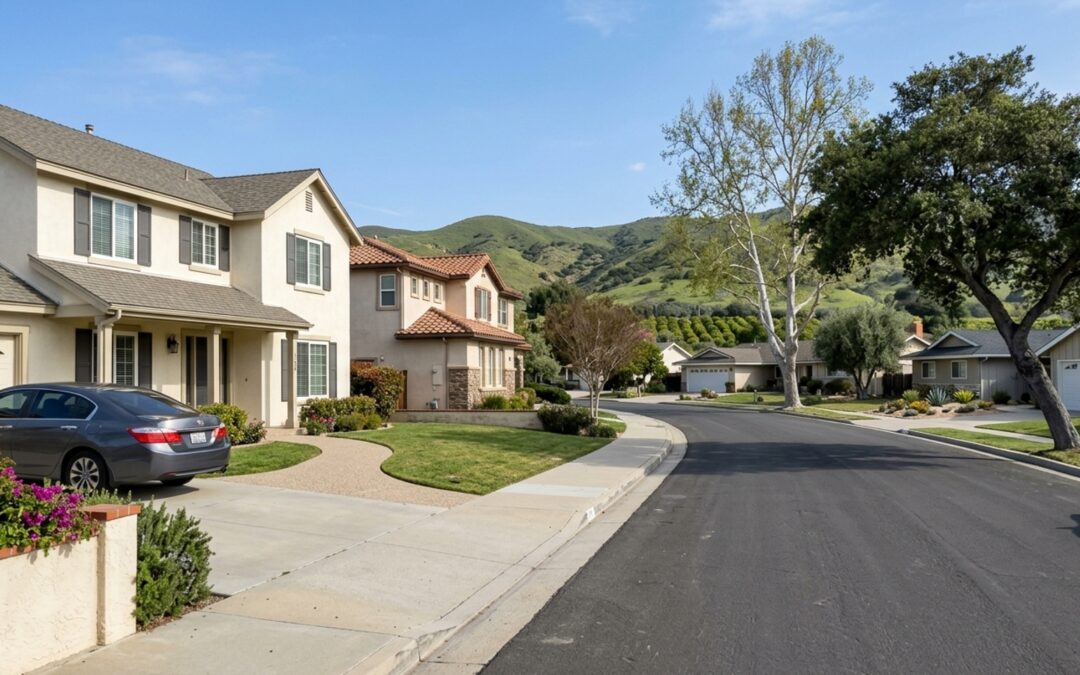
Buyers working through Ventura County often land on Camarillo, CA – and for good reason. The citywide median sale price sits around $825,000, and within that market, two of the best neighborhoods in Camarillo come up again and again: Mission Oaks and Central Camarillo. They’re both in the same city, but they’re not the same neighborhood. Different eras of housing stock, different lot sizes, different rhythms of daily life.
What it comes down to is what you want. Central Camarillo puts you in established, mid-century neighborhoods within reach of the historic retail districts. Mission Oaks puts you in late-20th-century developments with larger lots and immediate access to serious park infrastructure.
Home Prices and Market Pacing
Homes across Camarillo have been averaging about 49 days on the market before selling. With roughly 2.6 months of available supply, you’re not in a panic-offer environment – but well-priced listings move on a predictable schedule, and sellers know it.
That confidence shows up in the numbers. Recent citywide data has homes closing at roughly 99.2% of list price, with about a quarter of properties going above asking. Whichever side of town you’re targeting, come in with a solid pre-approval. Sellers here aren’t waiting around for buyers who are still sorting out their financing.
The citywide median of around $825,000 is a reasonable starting anchor, but localized pricing between the older central core and the eastern developments can move that number in either direction.
Mission Oaks Pricing Trends
Mission Oaks generally runs a bit higher. Recent median sale estimates range from $871,000 to just over $1 million depending on which subdivision you’re looking at. If you’re eyeing the Mission Oaks Estates sub-area specifically, expect a different conversation entirely – prices there typically land between $1.46 million and $2.2 million, reflecting the larger lots and newer construction that define that pocket.
Central Camarillo Pricing Trends
Central Camarillo gives you a slightly more accessible entry point. Median sale prices in the central district have recently hovered between $786,000 and $865,000. Some longer-run estimates push the historic core closer to $1 million, particularly for properties that have been fully renovated.
Housing Types and Architecture
Central Camarillo’s housing stock is older and well-settled, with many residences built between 1940 and 1969. You’re looking at the classic mid-century construction that defined the city’s original core – and there’s a consistency to it that a lot of buyers find appealing.
Single-story ranch-style homes dominate here. Traditional layouts, mature landscaping, property lines that have been in place for decades. You’ll also find homes built between 1970 and 1999 scattered through the central district, which tend to offer slightly updated floor plans without abandoning the neighborhood’s overall character.
Mission Oaks reads differently. The build era runs primarily 1970s to 1999, and the architecture leans toward Southern California traditional mixed with late-20th-century design sensibilities. Two-story homes are far more common here than in the central district, and single-level options exist but you’ll have fewer of them to choose from.
Lot sizes are a real differentiator. Mission Oaks homes generally sit on more land than newer Camarillo developments – if backyard space matters to you, that’s worth factoring in. Central Camarillo lots vary, but the age of the neighborhoods means you’re inheriting mature shade trees and established property lines, which has its own appeal.
Commute Times and Highway Access
US Highway 101 runs straight through Camarillo with eight exits between Camarillo Springs Road and Central Avenue. Both Mission Oaks and Central Camarillo connect to it – the question is just how you get there.
Mission Oaks feeds primarily to the Ventura Freeway via Mission Oaks Boulevard, which functions as the main local on- and off-ramp route. Residents there also use State Route 34 – known locally as Lewis Road – which runs south toward Oxnard and Point Mugu and can spare you some freeway traffic depending on where you’re headed.
Central Camarillo sits right on top of the 101. On-ramps are immediate, which makes the daily commute north to Ventura or south toward Los Angeles fairly straightforward from a logistics standpoint.
Both neighborhoods work for commuters. Buyers who want a bit more of a suburban buffer tend to lean toward the eastern edge of Mission Oaks. Buyers who want to be on the freeway in two minutes tend to favor the central district.
Parks, Shopping, and Local Amenities
The Camarillo Premium Outlets anchor the retail picture in Central Camarillo – they draw shoppers from across Southern California, so that gives you a sense of the scale. Mission Oaks takes a different approach, with localized shopping plazas built around daily convenience rather than destination retail.
Central Camarillo also houses the Camarillo Village Square Shopping Mall alongside the outlet center, and Old Town Camarillo is close by – independent shops and local eateries along the boulevard if you want something with more character than a chain. Mission Oaks residents handle most daily errands at Mission Oaks Plaza, situated directly across the boulevard from the Mission Verde area. Vons, CVS, Starbucks, and several dining options are all there, which means you can cover groceries and coffee without driving into the busier central retail zones.
Parks and Recreation Facilities
Mission Oaks Park at 5501 Mission Oaks Blvd is the anchor here – three lighted softball fields, tennis courts, picnic shelters, a playground, and an off-leash dog park. Charter Oak Park at 325 Charter Oak Dr. adds a walking path, basketball court, and open grass if you want something lower-key.
Citywide Park Access
Central Camarillo draws from the broader Pleasant Valley Recreation & Park District, which maintains 28 parks, four dog parks, and numerous sports fields across the city. Individual parks aren’t branded as belonging exclusively to the central district, but access to those municipal facilities is straightforward from anywhere in the area. The trailhead at Upland Road and Somis Road also connects residents to the Calleguas Creek bike path.
Frequently Asked Questions
What is the main difference between Mission Oaks and Central real estate?
The age and style of the homes. Central Camarillo is built largely on mid-century housing stock from 1940 to 1969 – predominantly single-story ranch-style. Mission Oaks is a later-era development, built primarily between the 1970s and 1999, with more two-story traditional homes and larger lots.
Are homes more expensive in Mission Oaks or Central?
Mission Oaks generally runs higher. Recent median sale estimates there range from $871,000 to over $1 million, and the Mission Oaks Estates sub-area reaches $1.46 million to $2.2 million. Central Camarillo’s medians have recently hovered between $786,000 and $865,000, making it the slightly lower entry point of the two.
What types of properties are available in Mission Oaks vs Central?
Central Camarillo is primarily single-story ranch-style homes from the mid-century era. Mission Oaks leans toward two-story single-family homes in Southern California traditional designs. Both areas are predominantly single-family residences – you’re not looking at dense condo complexes in either location.
Which Camarillo neighborhood provides faster freeway access for commuting to Ventura or Los Angeles?
Both connect well to US Highway 101, so your specific address matters more than the neighborhood name. Central Camarillo has immediate on-ramps right from the middle of town. Mission Oaks has direct access via the Mission Oaks Boulevard exits on the 101, and State Route 34 gives you an additional option for trips toward Oxnard.
What are the common maintenance considerations for Central Camarillo homes compared to Mission Oaks?
It’s a function of age. Central Camarillo homes were largely built between 1940 and 1969 – that means you should be inspecting the mid-century plumbing, electrical, and roofing systems carefully before you close. Mission Oaks homes are newer, built mostly between the 1970s and 1999, which generally puts you on younger foundation and structural elements.
Are there other established communities to consider beyond Mission Oaks and Central Camarillo?
While these two areas draw significant attention, buyers often expand their search to include other distinct local developments. Properties within the Leisure Village community in Camarillo provide another residential option within the city limits. Reviewing different subdivisions helps ensure you find the right fit for your preferred lot size and architectural style.
What other residential developments exist for buyers comparing local property options?
The city features several other neighborhoods that offer different housing styles and community layouts. Buyers frequently evaluate The Grove development in Camarillo when looking for alternatives to the central district. Checking these various subdivisions gives you a better sense of the overall local market.