
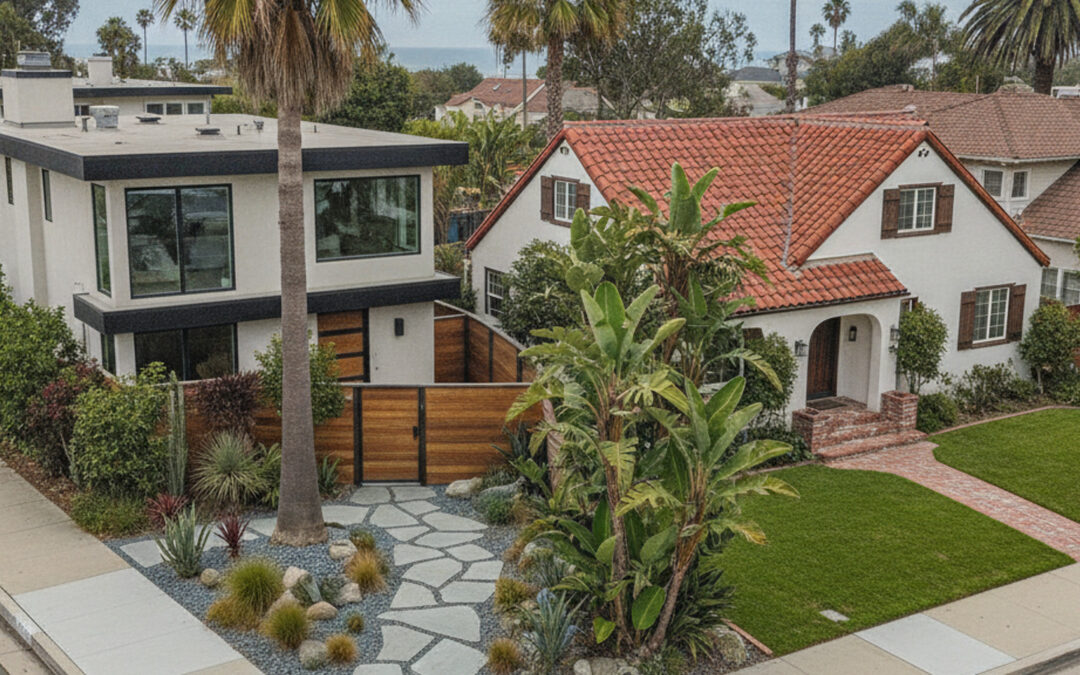
Ventura County isn’t one market – it’s several, and the one you land in depends largely on how close you want to be to the water. When living in Camarillo, CA, you are positioned further inland along US Highway 101; Oxnard stretches right up to the coastal plain. That’s roughly 10 miles between them, which doesn’t sound like much until you start comparing price points, property types, and the weather you’ll wake up to every morning.
Both cities give you access to major Ventura County employment centers and Los Angeles commuter routes. But “access” covers a lot of ground, and how your budget fits into each market is a different conversation entirely.
Housing Market and Price Trends
As of mid-2026, Camarillo commands a higher median sale price than Oxnard. Recent market data puts Camarillo’s median sale price at roughly $885,000, with homes averaging 29 days on the market. About 42% of recent sales closed above asking – that’s not a soft market.
Oxnard offers a slightly lower entry point. Median home value estimates for Oxnard range from about $750,000 to $850,000, depending on the neighborhood and how close you are to the coastline. Neither city has abundant inventory right now, so don’t walk into either one expecting leverage.
Median Home Prices
Camarillo is running about 192 available homes – roughly 2.9 months of supply, which puts it firmly in seller’s market territory. Well-priced listings move inside a month, and that $885,000 median reflects a year-over-year increase of around 3%.
Oxnard’s numbers are harder to pin down because the city spans inland suburban neighborhoods and premium coastal properties in the same ZIP code. Some mid-2026 data points put the average home value near $765,000, but closed sales in certain tracts push the median closer to $850,000. Buyers hunting for relative affordability often start in Oxnard before expanding their search east toward Camarillo.
Property Types and Architecture
Both cities mix single-family homes, condominiums, and new construction. Camarillo has large single-family neighborhoods built out over the last few decades, alongside newer developments with modern amenities.
Oxnard’s inventory is wider. You’ll find beachfront homes and marina-adjacent condos near the water, and further inland, established single-family neighborhoods and denser condo communities that tend to attract first-time buyers.
Property Taxes and Living Expenses
California’s Proposition 13 sets the baseline here: 1% of assessed value. Homeowners in both Camarillo and Oxnard layer local voter-approved add-ons and bonds on top of that, and the county-wide median effective rate lands at about 1.15%.
In practice, most homeowners in these two cities pay somewhere between 1.1% and 1.3% of assessed value – but that range matters when you’re running monthly payment estimates. The exact number depends on the specific tax rate area the property sits in, and you’ll want to verify that before you’re too far down the road on any particular home.
Local HOA Fees and Developments
HOA fees are common in both cities, especially in master-planned communities. In Camarillo, neighborhoods like Village at the Park carry dues that cover shared amenities and landscaping. Oxnard has similar structures in developments like RiverPark.
These fees aren’t cosmetic – they go straight into your debt-to-income ratio and can add hundreds of dollars to your monthly housing cost. Factor them in early.
Everyday Costs and Commuting
The primary connector between the two cities is US Highway 101, about 10 miles. A non-stop drive runs 15 to 20 minutes under normal conditions.
State Route 34 also links them via Pleasant Valley Road and Lewis Road, running from State Route 1 in Oxnard through Camarillo. State Route 232, or Vineyard Avenue, provides another local connector from US-101 in Oxnard north toward State Route 118 near Saticoy. You’ve got options, though on weekday mornings 101 is usually the one everyone’s using.
Parks, Recreation, and Local Amenities
Camarillo’s inland valley location means warmer days and a different set of draws – the Camarillo Premium Outlets pull shoppers from across Ventura and Los Angeles counties, and the city has a dispersed suburban layout with large parks and inland hiking trails.
Oxnard is a different proposition. Oxnard Beach Park and the local marinas put waterfront recreation right outside your door in a way Camarillo simply can’t replicate. The trade-off is the marine layer – Oxnard runs cooler and cloudier than the inland valley.
Coastal vs Inland Activities
If you’re buying in Oxnard, you’re buying proximity to boating, surfing, and beachside walking trails. That waterfront lifestyle is the primary reason a lot of people are there.
Camarillo buyers trade that immediate access for something quieter – large parks, inland trails, a more spread-out suburban feel. The beach isn’t far; the drive from Camarillo to the ocean takes about 20 minutes, which makes a weekend trip easy enough.
Getting Around Ventura County
From Camarillo, you’re looking at 15 to 20 minutes to Thousand Oaks (13 miles) and 20 to 30 minutes to Ventura (16 miles). Los Angeles is a different story – 60 to 90 minutes or more depending on when you leave.
Oxnard’s position on US-101 gives similarly short runs to Ventura and Port Hueneme. For regional travel, the Camarillo Metrolink station is a rail option worth knowing about, and the Ventura County Transportation Commission (VCTC) Coastal Express bus lines connect to Santa Barbara, Ventura, and Thousand Oaks.
Frequently Asked Questions
How much more expensive is buying a house in Camarillo, CA compared to Oxnard?
Recent 2026 data puts Camarillo’s median sale price at approximately $885,000. Oxnard generally runs lower, with estimates ranging from $750,000 to $850,000. The exact gap depends on the specific neighborhood and property type you’re looking at.
How does the weather and microclimate differ between coastal Oxnard and Camarillo, CA?
Oxnard sits directly on the coastal plain – cooler temperatures and regular marine-layer cloud cover come with the address. Camarillo is in an inland valley, which means noticeably warmer weather and more sunny days year-round.
Is Camarillo or Oxnard a better location if I need to commute to Los Angeles for work?
Camarillo is geographically closer to Los Angeles along US-101, cutting about 10 miles off the trip compared to starting in Oxnard. That said, drives from Camarillo to LA still run 60 to 90 minutes or more depending on traffic – so the advantage is real but modest.
Are there specific property taxes or Mello-Roos fees I should watch out for when choosing Camarillo over Oxnard?
Both cities operate under the Ventura County property tax system, with effective rates running roughly 1.1% to 1.3%. Specific tax rate areas and local bonds vary by neighborhood, so check the exact assessments on any individual property before you assume a number.
Do homes in Camarillo, CA generally appreciate faster in resale value than properties in Oxnard?
Camarillo has shown steady growth – median sale prices up about 3% year-over-year as of mid-2026. Oxnard’s appreciation rates fluctuate more because of the mix of inland and coastal sales, but both markets are supported by limited Ventura County inventory overall.